
By the time children are around five years old, many are developing confidence with numbers and counting. These skills lay a foundation for early math, but it’s important to remember that every child grows at their own pace. As a parent, you don’t need to be a math expert—you just need to know what to notice and how to support your child naturally at home.
Understanding Counting in Everyday Life
Counting isn’t just about reciting numbers from memory. It’s about connecting numbers to real things your child can see and touch. When your child counts, they are learning to match numbers to objects, understand “how many,” and notice patterns in the world around them.
For example, when setting the table, you might ask, “How many forks do we need for everyone?” Letting your child count the forks as they place them gives meaning to numbers. Everyday moments like this are powerful learning opportunities.
Counting Objects Accurately
By age five, many children can count a small group of objects—like blocks, toys, or snacks—accurately. This means they can point to each item one by one and say a number for each, without skipping or repeating.
A simple activity you might try at home is counting steps. For instance, as you walk up stairs together, ask your child to count each step out loud. Another idea is counting snacks as you give them, “Let’s put three grapes on your plate—can you count them?” These activities make counting concrete and fun.
Recognizing Numbers
It’s helpful for preschoolers to start recognizing numbers as symbols, not just words. By five, many children can identify numbers from 1 to 10 and sometimes beyond.
You can support this at home by pointing out numbers in your environment. “Look, the mailbox has the number 7!” or “Your cereal box says 3 cups—let’s count them.” These small moments build familiarity without pressure.
Understanding “More” and “Less”
Counting also involves understanding quantity. By age five, children often grasp concepts like “more,” “less,” or “the same.” They may notice if one plate has more cookies than another or if one pile of blocks is taller than another.
To practice this, you can ask questions like, “Which pile has more?” or “Do we have enough cups for everyone?” This encourages children to compare quantities and think about numbers in context, which is a key step in early math thinking.
Counting Beyond Ten
Many children start to explore counting past ten by age five, though it may feel tricky at first. You might hear them mix up the order or repeat numbers—this is normal. The important thing is that they are trying and making sense of the pattern.
You can gently support this by counting objects together in larger groups. For example, “Let’s count all the toy cars—one, two… all the way to twelve!” Using everyday items makes it more concrete, rather than just reciting numbers from memory.
Using Counting in Play
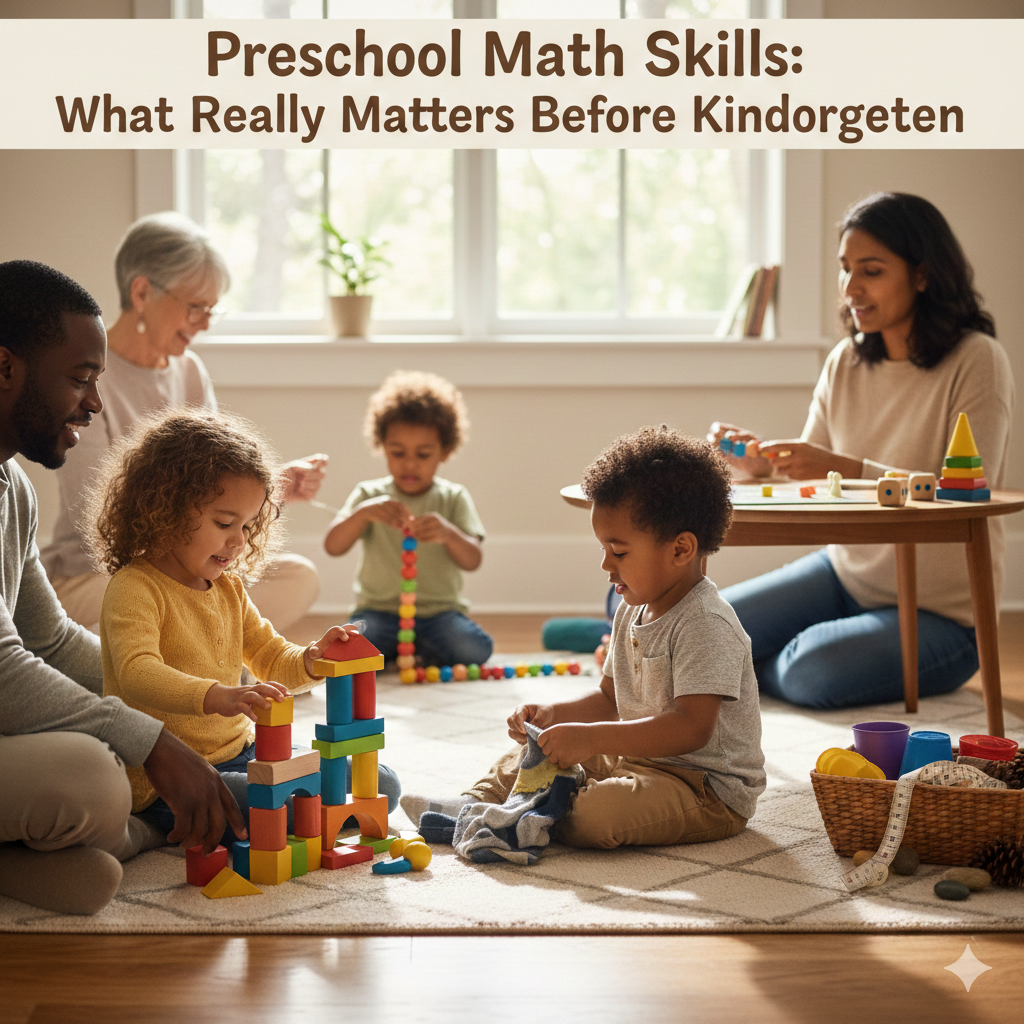
Play is a powerful way for children to practice counting. Games that involve moving pieces, stacking blocks, or setting up pretend food all encourage number skills.
Board games with spaces to move, counting items during pretend grocery shopping, or building towers and counting the blocks as they go are all natural ways to reinforce counting. Children enjoy these activities because they feel like play, not lessons.
Encouraging Estimation and Guessing
By age five, children may begin to make rough guesses about quantity. For example, they might look at a small pile of blocks and say, “About seven.” These early estimation skills are important—they show that children are starting to think flexibly about numbers.
At home, you can encourage estimation by asking playful questions: “How many spoons do you think we need to set the table?” or “How many jumps do you think it will take to reach the tree?” Praise their effort, not just accuracy.
Counting in Sequence and Patterns
Beyond counting objects, children also start noticing number patterns. They might count by twos or fives, or recognize that numbers go up and down in order.
You can support this by singing counting songs, clapping while counting, or lining up toys and counting them together. Encourage your child to see connections, like, “We have 2 red cars, 2 blue cars—how many cars is that in total?”
Keeping Counting Fun and Stress-Free
It’s normal for children to skip numbers, start over, or mix them up. The goal at this age is not perfection but comfort with numbers. Keep counting light, playful, and integrated into daily life.
Celebrate small successes: “You counted all the blocks by yourself—great job!” Make mistakes part of the process: “Oops, let’s count them again together.” Your positive attitude helps children feel confident and curious about numbers.
Signs Your Child is Progressing
By age five, many children can:
- Count objects accurately up to at least 10
- Recognize numbers from 1–10
- Understand basic concepts of “more” and “less”
- Begin counting beyond 10
- Use counting in play and everyday tasks
Remember, children develop at different rates. Some may master these skills earlier, while others take more time. Regular exposure, gentle guidance, and playful practice are far more important than strict testing.
Everyday Opportunities for Counting
Here are a few simple ways to practice counting every day:
- Snack time: Count grapes, crackers, or pieces of fruit together.
- Setting the table: Count forks, plates, or cups.
- Walking and moving: Count steps, jumps, or claps.
- Tidying up: Count toys as you put them away.
- Pretend play: Count money, cars, or animals in games.
These moments turn routine tasks into counting practice without any extra pressure.
Final Thoughts
Counting is more than memorizing numbers—it’s about understanding quantity, sequence, and patterns in the world. By age five, most children are exploring numbers in fun, meaningful ways. As a parent, your role is to notice, support, and celebrate these small successes.
Keep the experiences playful, everyday, and stress-free, and your child will gain a solid foundation for math while feeling confident and curious. Counting isn’t just a skill—it’s a way for children to make sense of the world around them.